

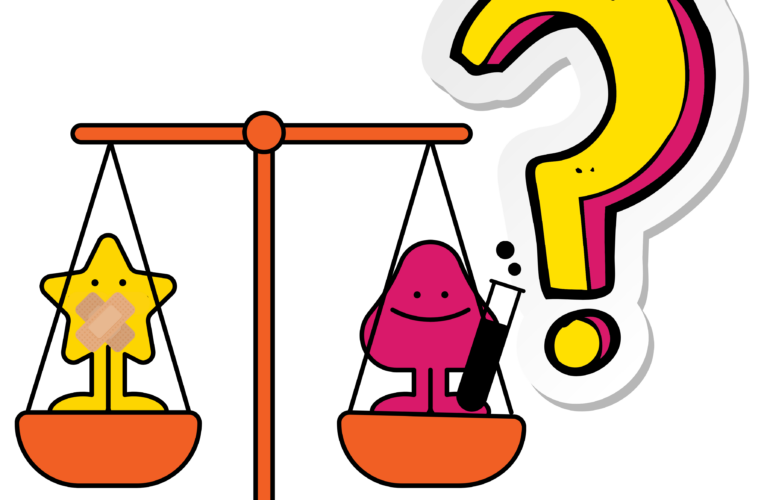
Patients and members of the public play many different roles in research teams. They can be involved in just one aspect of the process or play a full part in the whole, often referred to as co-production – researchers, patients and the public producing research together, equal partners for equal benefit.
There are of course many complexities in co-production in health and care research teams.
This article focuses on a particular issue, that is, when a research team is dominated by particular individuals or by one group of people and others do not have the opportunity to have their voice heard. This can be due to some forms of knowledge being valued more than others.
Health and care knowledge based on currently-understood facts – propositional knowledge – is more likely to be held by healthcare professionals and scientists. Knowledge based on experience – experiential knowledge – is more likely to be held by patients or members of the public.
Although we need multiple perspectives in a research team, experiential knowledge is often given less value than propositional knowledge.
This problem – a hierarchy of knowledge – can be seen in wider society as well as in research teams. Some people refer to this problem as ‘epistemic injustice’.
Epistemic injustice in healthcare refers to someone being discriminated against by not being listened to or heard when they speak about healthcare, not having their ways of knowing acknowledged or having their interpretation of something questioned.
This practice can have disastrous results. The physical and psychological harm which can be done by medicines and medical devices when patients voices are not heard was detailed in a 2020 report. An NHS report on patient safety estimated that improvements could save up to 1,000 lives and £100 million in care costs each year. So how can we strengthen patients’ voices in healthcare delivery and research?
The National Institute for Health Research’s guidance for co-producing a research project sets principles to guide practice. Its third principle – respecting and valuing the knowledge of all those working together on the research – is relevant here.
Most of us would agree with this in principle, but in practice, our biases and assumptions can get in the way.
Two actions can help to overcome these issues: getting to know ourselves better and getting to know fellow research team members better. If we know ourselves better, we will be able to spot our assumptions and biases about different sorts of knowledge and the people who hold them and perhaps do something to lessen their impact. If we get to know others better, we will be more aware of what special knowledge and resources they bring and delight in the opportunity to work and learn collaboratively.
Together we can then make a positive difference to patient care.
The PATCHATT Community Group have produced some resources to help us to get to know ourselves and one another better. They are freely available below – we hope they are useful to you and your team.
Resources:
https://www.patchatt.co.uk/doingresearch
Amanda Roberts
Co-leader of PATCHATT Community Group





Leave a Reply