


Bishkek, 2–4 December 2025—The PACED Leadership School on Palliative Care took place in the capital of Kyrgyzstan, bringing together specialists from across the region to enhance leadership skills and support the development of sustainable palliative care systems.
The three-day educational programme was held at the Novotel Bishkek in strategic partnership with the Kyrgyz Association of Palliative and Hospice Care. Participants included clinicians, managers, and advocates from eight countries—Georgia, Armenia, Mongolia, Belarus, Serbia, Latvia, Uzbekistan, and Kazakhstan—as well as a national team of Kyrgyz experts.
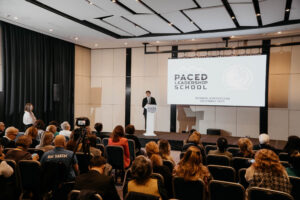
In his opening remarks, Edil Baisalov, Deputy Chair of the Cabinet of Ministers of the Kyrgyz Republic, stressed the significance of government involvement in promoting palliative care:
‘The development of palliative care demonstrates the maturity of a healthcare system and our dedication to the most vulnerable people. The government will continue to support initiatives that make this care more accessible, higher in quality, and more compassionate for everyone who needs it.’
Emphasising Leadership, System change and Advocacy
The first day of the programme involved an overview of the palliative care landscape in PACED countries, a discussion of national contexts, and a workshop on transformational leadership. Participants examined key leadership competencies, identified personal areas for development, and set their professional goals.
‘We have listed the leaders who influenced us—and many of them are here in this room. It is a privilege to learn from them and from one another,’ said Roman Sklotskiy, Managing Director of PACED.
The advocacy module, led by Dr Odontuya Davaasuren (Mongolia), focused on analysing systemic gaps and developing solutions to strengthen palliative care at both the national and regional levels. During practical simulations, participants rehearsed negotiations and explored arguments to improve access to pain relief and organise services.
Field Visits, Analysis, and Project-Based Solutions
On the second day, the participants visited three palliative care facilities—

the Republican Rehabilitation Centre,

the Social Inpatient Facility Umut Uyu, and
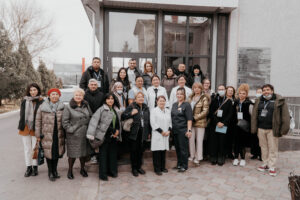
the Palliative Care Unit at the National Centre of Oncology and Haematology.
They observed service delivery in practice and discussed approaches, challenges, and models of care.
During the project laboratory, participants identified key issues across critical areas—workforce capacity, training, quality of pain management, home-based care, and the integration of services into health systems.
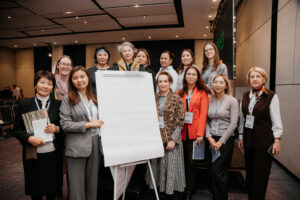

Each group devised practical, actionable solutions, ranging from educational initiatives and quality standards to improvements in mobile services.
Education, Clinical Case Discussions, and Leadership Insights
The final day concentrated on educational strategies. Professor Nicoleta Mitrea (Romania) led a session on effective training approaches for palliative care professionals. Her workshop encouraged participants to critically examine existing education programmes in their countries and consider their roles as learners, teachers and leaders.
The clinical case discussion brought together stories from several countries, opening a conversation about ethical dilemmas, cultural considerations, family communication, and the work of mobile teams. Experts complemented the discussion with practical recommendations.
‘Morphine is the same everywhere. A good psychologist is not. Find the people from whom your palliative care tree will grow,’ advised Dr Yakhyo Ziyaev, oncologist and Secretary-General of the Oncology Association of Uzbekistan.
The programme ended with a panel discussion involving palliative care leaders from several countries.
‘PACED is like a bridge where many roads meet. Each of us travels our own path and suddenly arrives at this bridge—where our roads briefly connect, allowing us to see and hear one another,’ shared Taalaygul Sabyrbekova, Co-Chair of the Kyrgyz Association of Palliative and Hospice Care.
About PACED
PACED is an international charity founded in the United Kingdom in 2017. Its aim is to enhance the quality and accessibility of palliative care in its target regions by supporting professionals, fostering leadership, and implementing sustainable healthcare solutions. PACED operates in Central Asia, the South Caucasus, Eastern Europe, and the Baltic states.
Learn more via www.paced.org.uk or in our social media: Facebook, LinkedIn, Instagram
Media enquiries: kn@paced.org.uk — Katerina Nikitina, Head of Communications
About the Kyrgyz Association of Palliative and Hospice Care
The Association is a coalition of legal entities established in 2018 by three NGOs: Ergene Public Foundation, Together Against Cancer Foundation, and the Association of Oncologists and Radiologists. Its main objectives include developing and delivering palliative care services, expanding access to pain relief, and advocating for the rights of palliative patients.
Further details can be found on Facebook.
Media enquiries: sabyrbekova2011@gmail.com—Taalaygul Sabyrbekova, Co-Chair of the Association.


Leave a Reply