

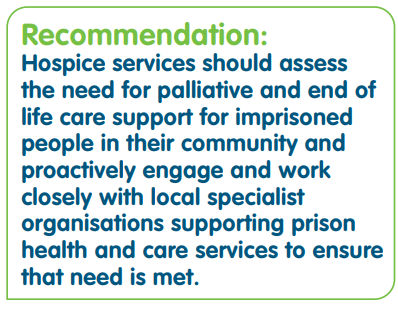
Launched in 2024, the End-of-Life Care Behind Bars website fills a critical information and advocacy gap for a unique, often overlooked population. While general prison healthcare has gained attention, keeping pace with research on palliative care within correctional facilities remains a challenge for busy professionals. As a dedicated advocacy, teaching, and research hub, this site streamlines access to essential knowledge.
Users can find the latest developments, including curated reviews of articles and reports, in the monthly bulletins on the “Current Thinking” page, while the “Spotlight” page offers commentaries on several key issues. As this resource grows, it aims to foster a necessary shift in societal attitudes toward the care and dignity of incarcerated individuals at the end of life.
Following are selected articles, reports, etc., from the latest (November) posting. Access the monthly postings at: https://bit.ly/47sVCRU
_________________________________________________________________________________________________________
Action required to build palliative care capacity in prisons: A descriptive qualitative study
Palliative Medicine (Australia) | Online – 30 October 2026 – Globally, people in prison are increasingly older, more culturally diverse and have a growing need for palliative and end-of-life care. Building palliative care (PC) capacity within Australian prisons requires targeted action at the individual, organisational and community levels to address organisational fragmentation, strengthen intra- and inter-organisational collaborations, address workforce training needs and strengthen cultural responsiveness. Addressing these challenges demands not only ‘Just-in-Time’ training but also systemic reform, including embedding Aboriginal and Torres Strait Islander leadership, strengthening partnerships and developing structures that support compassionate, integrated and sustainable PC. These findings provide a foundation for national policy frameworks and targeted workforce development strategies to ensure parity in PC between prisons and the wider community. Full text: https://bit.ly/3WzXjer
Reforms in Department of Corrections palliative and hospice healthcare
Presswire (U.S.) | Online – 20 October 2026 – A measure raising palliative and hospice healthcare cost reporting requirements in the Illinois Department of Corrections (IDOC) … was recently signed into law. “Palliative and hospice care in our corrections system is vital, but it too often goes overlooked. At a time when federal funding cuts demand that we look carefully at how we use taxpayer dollars, we need better information to make smart, responsible reforms,” [commented] Nicolle Grasse (D-Arlington Heights). “Right now, we do not have a clear picture of end-of-life care (EoLC) costs in Illinois correctional facilities, and those costs can vary significantly. Collecting this data is a common-sense, fiscally responsible step that will help us identify opportunities for more consistent, compassionate and efficient care.” Grasse sponsored House Bill 4665, which requires the IDOC to include the costs of EoLC for people who die of natural causes without hospice or palliative programs in its annual report data. This requirement is an expansion of the Eddie Thomas Act, which requires the IDOC gather and post online other health data on palliative and hospice care for incarcerated individuals. Full text: https://bit.ly/4yVqEOO
The route to success in end-of-life care – achieving quality in prisons and for prisoners
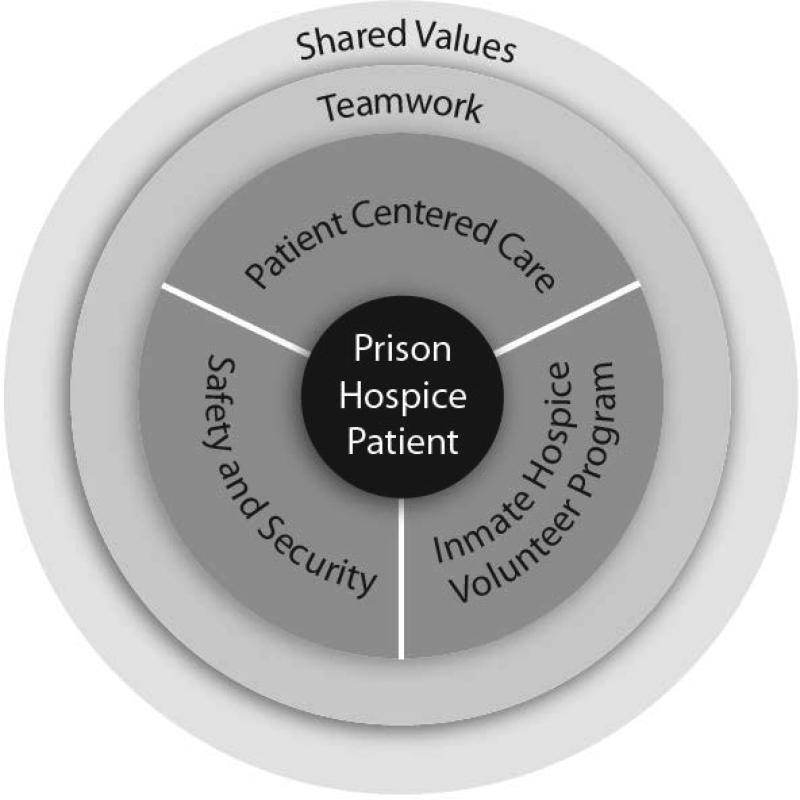
National Health Service (U.K.) | Online – Undated (Accessed 8 October 2026) – The document provides guidance for delivering high quality end-of-life (EoL) care to prisoners, outlining six steps from initiating discussions as EoL approaches to care after death. It discusses the need to identify prisoners approaching EoL and have open conversations about their wishes, while also addressing the complex considerations around safety, security, and communication within the prison system. The goal is to ensure prisoners receive compassionate and dignified care at the EoL regardless of their setting. The key to successfully managing EoL in prison is working together as a team: officers, governors, healthcare staff and external and third sector organisations. Each part contributes on those areas that fall within their expertise, and supports the other team members during what is a difficult time for all. Access document at: https://bit.ly/4yatNJk
Of related interest:
Prison healthcare governance and public health: A call for research
The Lancet Public Health, 2026;11(11):E845. Despite the disproportionate burden of health disorders in people who are imprisoned, and the public health implications of these health disorders, responsibility for prison healthcare has historically rested with justice authorities rather than with the national health systems. Recommendations by international organisations have contributed to reforms in which responsibility for prison healthcare has been transferred to health authorities. From an ethical perspective, health-led governance can support equivalence of care, clinical independence, confidentiality, and professional standards. From a health-system perspective, health authorities could be better positioned to integrate prison and community services, continuity of care, health surveillance, recruit and train health-care professionals, and implement national prevention and treatment programmes. Despite encouraging reports suggesting that transferring prison healthcare governance to health ministries could improve clinical standards, quality of services, and integration into public health, the evidence regarding whether the transfer of prison health-care governance itself improves health outcomes remains limited. Full text: https://bit.ly/4yyt1Go
Nursing when the patients are prisoners
Medscape Medical News (U.S.) | Online – 25 September 2026 – Correctional nurses use the same clinical knowledge and skills whether they are distributing medication, treating wounds, managing chronic health conditions, or responding to emergencies. But working in a jail means that the environment and the patients present unique challenges (see sidebar). Although the U.S. has one of the highest incarceration rates in the world, there are fewer than 28,000 working in correctional facilities, and security is likely to be a greater concern than healthcare administration. Correctional nurses work in facilities to provide healthcare; their role requires working alongside custody staff and within the facility’s security structure without surrendering their clinical judgment. However, sometimes, those systems collide. The level of specialization led the American Nurses Association to recognize correctional nursing as a specialty with its own scope and standards of practice. Full text: https://bit.ly/4iayn5x
How America’s patchwork of death-in-custody rules is failing families
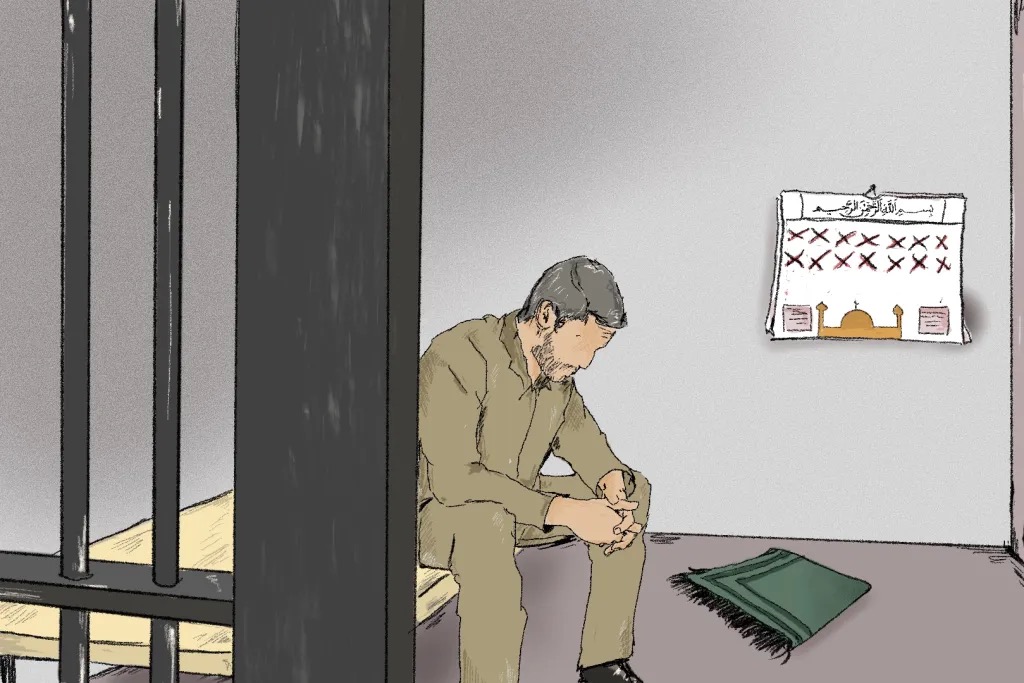
The Marshall Project (U.S.) | Online – 8 October 2026 – A new report … [has] … found that protections for people who die in government custody are inconsistent, opaque, and frequently lack consideration for both religious preferences and the wishes of the families of the deceased.1 The report evaluated the public written policies that dictate what happens after someone dies in prison or jail in all 50 states… The researchers evaluated each jurisdiction across 59 metrics, like how families are notified of a death, whether the dead person’s religious beliefs are taken into consideration, and whether independent oversight is mandated when a death occurs. Bodies of people who die in custody can be cremated, even when it violates their religion (see sidebar), or be donated to science without consent… The most shocking … is the lack of dignity afforded to people who die in prisons… Full text: https://bit.ly/4BeEAVV
- ‘Dignity of the Dead in Government Custody in the United States and on Online Platforms,’ Princeton Policy Advocacy Clinic (June 2026). Download the report at: https://bit.ly/4rVy41J
A new posting on the ‘Spotlight’ page of the website
Healthcare for Aboriginal, First Nations & Indigenous Peoples Who Are Incarcerated: Current thinking
Recently posted on the ‘Spotlight’ page of the End-of-Life Care Behind Bars website is an annotated listing of the articles, reports, etc., focussed on culturally sensitive healthcare for incarcerated Aboriginal, First Nations and Indigenous peoples which have been included in past postings on the website: https://bit.ly/40Ouav1
_________________________
Picture Source: ‘Dying Behind Bars: How can we better support people in prison at the end of life?’ Hospice UK (2021): https://bit.ly/4bE9RU9
——————
Barry R. Ashpole, Ontario, CANADA Biosketch: https://bit.ly/3XMTRs4
BARRY R. ASHPOLE is an educator and communications consultant living in Ontario, Canada. Now semi-retired, he has been involved in palliative and end-of-life care since 1985. He established the End of-Life Care Behind Bars website (https://bit.ly/4dU4qmi), an advocacy, teaching and research “tool” to inform and, hopefully, affect a seismic shift in society’s attitudes towards the health and well-being of the incarcerated. Regular postings include annotated listings of current articles, reports, and so on, culled from the professional literature, the news media and other sources.
Republish This Article
The author believes in the free flow of information. Republish this article for free, online or in print, under Creative Commons licence, with due credit to the author and source. https://bit.ly/47sVCRU
———————
ehospice is proud to help promote individual, local, national and international voices in Hospice & Palliative Care
We are on target to have over One Million page views this year.
To stay in touch with colleagues and news around the world subscribe to our free Newsletter



Leave a Reply