

It accompanies us through life’s great thresholds: births and weddings, protests and celebrations, illness, grief, funerals and remembrance. We turn to it not because it distracts us from mortality, but because it helps us live in its presence.
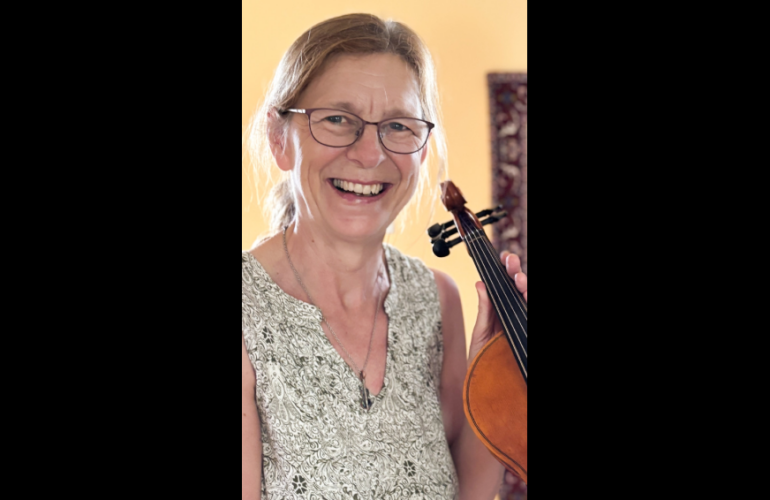
Professor Andrea Creech has spent nearly two decades exploring how music shapes identity, creativity and community as we age. Her work quietly challenges one of our deepest cultural assumptions—that growing older is simply a story of decline. Instead, she invites us to imagine aging, and even what we call the end of life, as another phase of living.
It is perhaps no surprise, then, that this year’s Kappy Lecture turns to music. With the support of McGill University’s Schulich School of Music, this Kappy Lecture reflects a belief that some of our deepest questions about aging, care and mortality are explored as powerfully through culture as they are through medicine.
This October 6th, Dr. Creech joins acclaimed singer-songwriter Martha Wainwright as discussant for The Kappy Lectures: An Evening with Martha Wainwright, presented by the Council on Palliative Care and in collaboration with the Montreal International Palliative Care Congress. Before the two meet on stage at Pollack Hall to weave together conversation and live performance, we spoke about music, aging and what it means to continue becoming ourselves.
Elle Flanders (EF): What first drew you to study music and ageing?
AC: It really began in my own life. Around 2007 or 2008, many of the people I loved—my parents, my in-laws and close friends—were becoming older, and I found myself taking on caring roles. I often say that the things we research usually align with the questions that matter most in our personal lives. That led me to ask a simple question: What role does music play as we age?
EF: Your work suggests that music doesn’t simply accompany our lives—it helps shape who we are.
AC: Music shapes identity, but it also allows us to express it. We experience music emotionally, physically, cognitively and socially, all at once. Because music is so deeply encoded in memory, someone who can no longer hold a conversation may still sing every word of a song learned decades earlier. Music continues to hold parts of ourselves that other forms of memory sometimes cannot. It connects us—not only with our past, but with one another.
EF: Listening to you, and reading your work, I found myself wondering whether we need to rethink not only aging, but what we mean by the end of life. We often speak as though life somehow stops before death actually arrives. Perhaps growing older is simply another phase of living—not lesser, just different. Does your research point us in that direction?
AC: I think it does. Music certainly carries nostalgia, but that’s only part of the story. I often describe music-making as a protest against the narrative of decline. We continue imagining who we might become throughout our lives. I talk about “possible selves”—our capacity to imagine future versions of ourselves.
I remember asking my father-in-law, who was well into his nineties, whether he still had musical ambitions. He looked at me as though the answer was obvious.
“Andrea, of course I do.”
One of the things I like to remind people is that we shouldn’t be surprised when older people do interesting things. Yet we often are. Someone says, “Isn’t it amazing she still plays the piano at eighty-five?” Why should that surprise us? Creativity doesn’t disappear simply because we grow older.
EF: People often think of music as something that comforts us at the end of life. Your work suggests something broader—that music accompanies us throughout life, helping us remain connected to ourselves and to one another. What has your work taught you about music’s role in care?
AC: Music brings people together. I’ve watched people in long-term care who barely knew one another develop genuine friendships through making music together. Even when language becomes difficult, music remains emotionally meaningful. It strengthens connection, reinforces identity and reminds us that we belong to one another. That need for connection doesn’t diminish with age. If anything, it becomes even more important.
EF: This October you’ll join Martha Wainwright for The Kappy Lectures: An Evening with Martha Wainwright. What are you most looking forward to?
AC: It’s an enormous honour. The McGarrigles were my musical heroes, and they still are. I’m excited by the opportunity to bring a research perspective into conversation with someone whose life has been shaped by music, family and performance.
What’s also become very personal is that I’ve returned to music myself. I was a professional viola player many years ago, and recently I’ve begun playing again, even taking up the five-string fiddle. In many ways, I’m experiencing exactly what I’ve spent years researching. I’m discovering a freedom through music that I don’t think I could have experienced earlier in my life. I’m walking the talk.
Leaving our conversation, I found myself returning to the opening question. Perhaps the most compelling conversations are those that unfold not only through words but through music.
Andrea Creech reminds us that we do not stop becoming ourselves simply because we grow older. If music helps us remain open to who we might yet become, then perhaps even the final chapter of life is not defined by decline, but by the possibility of continued becoming.
—————-
For more information about the McGill Council on Palliative Care and the Martha Wainwright concert on October 6th, please visit the Council website. Purchase your tickets here.





Leave a Reply